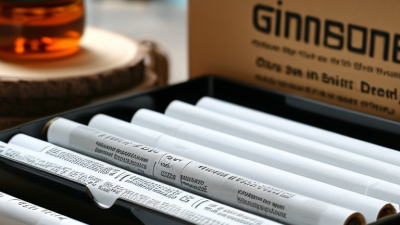
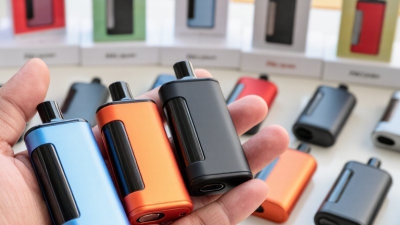
Sourcing a compliant electronic cigarette one time use product requires more than comparing prices, flavors, or battery capacity. Buyers must verify whether the product is legally permitted in each target market, then document every compliance decision. Regulations can differ sharply between countries, states, and even sales channels. A product accepted in one jurisdiction may be restricted elsewhere.
Public-health data shows why careful sourcing matters. The U.S. Centers for Disease Control and Prevention reported in the 2024 National Youth Tobacco Survey that approximately 1.63 million U.S. middle and high school students currently used e-cigarettes. Among current users, disposable devices remained the most common type. This figure does not prove that every disposable product creates the same risk, but it highlights the need for strict age controls, responsible packaging, and careful distribution. The World Health Organization also emphasizes that electronic nicotine delivery systems require product oversight, clear labeling, and controls against youth access.
A reliable supplier should provide traceable batch records, ingredient specifications, laboratory test reports, battery safety documentation, and packaging samples. Check nicotine concentration, emissions testing, leak resistance, charging design, and child-resistant features where required. Confirm that claims match laboratory evidence. A small detail matters: the lot number should remain readable after transport and storage. Ask who performed each test, under which standard, and when the report was issued. Do not rely on a certificate alone. Some documents look complete but lack scope, accreditation, or product-level identification. That is an uncomfortable gap, yet it deserves attention. FDA compliance resources, national regulator guidance, and current WHO publications should be reviewed before purchase. Compliance is not a one-time checkbox; it is an ongoing supplier-management process.
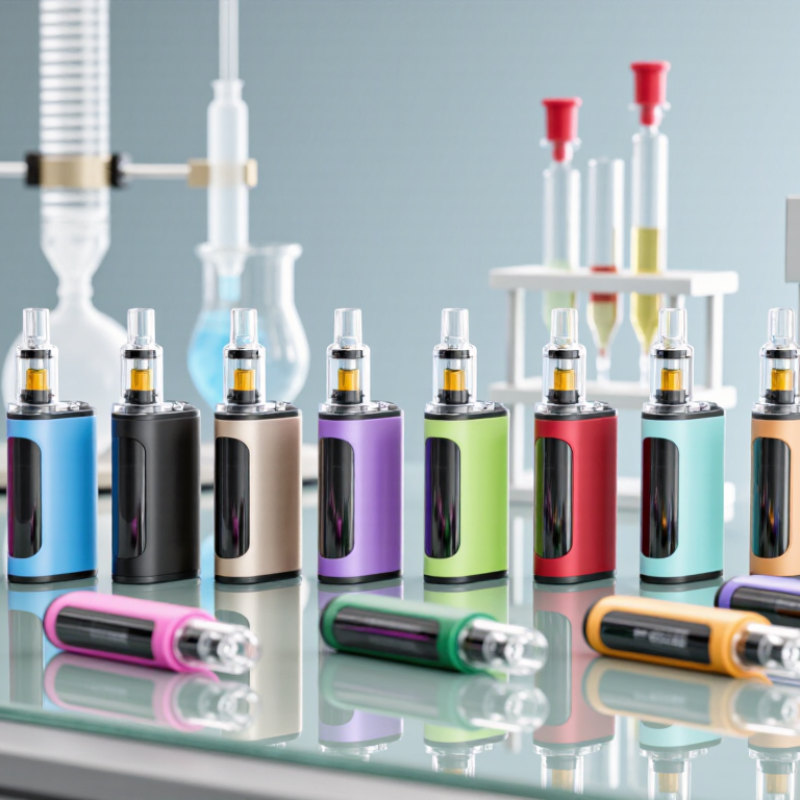
Before sourcing one-time use electronic cigarettes, create a written compliance checklist for each target market. Requirements may cover nicotine concentration, ingredients, emissions testing, labeling, packaging, battery safety, and product traceability. The EU Tobacco Products Directive limits nicotine liquid to 20 mg/mL and device reservoirs to 2 mL. These limits must be verified through laboratory records, not supplier claims. The World Health Organization’s 2024 global tobacco trends report estimates 1.25 billion adult tobacco users worldwide in 2022, showing why regulators continue to tighten product controls. Market demand does not reduce compliance duties.
Ask suppliers for full ingredient declarations, certificates of analysis, batch records, and stability data. Check whether testing laboratories hold suitable accreditation, such as ISO/IEC 17025. Review battery transport evidence, including UN 38.3 testing, and inspect charging protection, leakage resistance, and disposal instructions. A practical audit should include sealed samples, lot numbers, tamper-evident packaging, and photographs of final labels. Small labeling errors can delay customs clearance.
Tips:
Build a country-by-country matrix before placing an order. Confirm marketing authorization requirements with the relevant authority. Keep an independent retained sample from every batch. Do not rely on a copied certificate. I have seen paperwork look complete while the tested product differed from the production sample. That gap deserves attention. Suppliers should explain deviations, corrective actions, and recall procedures in writing. Still, no checklist replaces local legal review before commercial distribution.
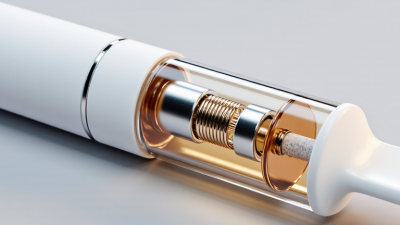
Reliable sourcing begins with product safety, not price. Ask suppliers for complete regulatory documentation before discussing large orders. This should include test reports, material specifications, battery safety records, and quality management certificates. Check whether an independent laboratory issued each report. Confirm the laboratory’s accreditation and testing scope. Dates matter too. Old documents may not represent the current product.
Examine the device itself. Request samples from the same production batch shown in the records. Inspect the casing, mouthpiece, liquid chamber, charging limits, and packaging labels. Safety files should identify restricted substances and explain manufacturing controls. Requirements differ by market, so verify local rules with qualified compliance professionals. A document that works in one country may fail elsewhere. I have seen neat compliance folders hide missing batch evidence. That gap needs attention.
Tips: Keep a document register with issue dates, product codes, and responsible contacts. Compare every certificate with the exact model and factory address. Ask for corrective-action records when a test result is unclear. Do not rely on supplier summaries alone. Visit the facility when practical, or arrange an independent audit. Records can be incomplete. Good sourcing leaves an audit trail from factory inspection to final delivery.
Sourcing compliant one-time-use electronic cigarettes starts with the supplier’s evidence, not its sales presentation.
WHO’s 2023 global report recorded 88 countries without a minimum sales age and 74 without specific e-cigarette regulations. Therefore, manufacturers must map every shipment to the destination market’s rules. Request licenses, product specifications, material declarations, laboratory reports, and documented change-control procedures. A supplier that cannot explain its legal assumptions should not pass prequalification.
Audit the factory in person, or use an independent auditor. Review incoming-material checks, assembly controls, leak testing, airflow consistency, battery protection, and final packaging inspections. Require batch-level traceability from components to finished units. Testing should use laboratories accredited to ISO/IEC 17025, where available. Verify nicotine content, contaminants, emissions, electrical safety, and child-resistant packaging against applicable local requirements. The FDA’s 2024 National Youth Tobacco Survey reported 1.63 million U.S. middle and high school students currently used e-cigarettes, making age controls and marketing review essential.
Quality data should be sampled over time, not collected from one attractive batch. Ask for failure rates, complaint trends, corrective-action records, and retention samples. Certificates can be genuine yet incomplete. I would also inspect warehouse humidity, carton damage, and transport records. A clean audit is not proof of consistent production. My own mistake would be trusting polished documents before checking raw test data.
Sourcing compliant single-use electronic cigarettes begins with the package, not the supplier’s promise. Request clear photographs of the retail carton, inner unit, seal, and shipping case. Check whether required warnings, ingredient information, net contents, manufacturer details, and disposal instructions are visible and readable. Text should remain legible under ordinary warehouse lighting. Tiny grey print is a warning sign.
Labels should match the product inside. Confirm the stated flavor, nicotine content where applicable, device quantity, and production date against technical documents. A tamper-evident seal can show interference, but it does not prove regulatory compliance. Ask for test reports from qualified laboratories and verify their scope, dates, and sample identification. Requirements differ by market, so confirm every detail with current local authorities before purchase.
Traceability must work beyond the retail shelf. Each unit should carry a consistent lot or serial code, while cartons and pallets should link to the same production record. A practical system records supplier, factory line, batch date, shipment route, and receiving inspection. Scan the code during arrival, then retain photos and signed checks. QR codes can help, but they may fail when links change. Paper records still matter. One weakness remains: suppliers sometimes provide perfect samples but inconsistent bulk shipments. Randomly inspect delivered cartons, not only approval samples.
| Compliance Dimension | Requirement or Control | Applicable Market or Reference | Supplier Evidence to Request | Sourcing Decision |
|---|---|---|---|---|
| Market authorization | Confirm that the specific device, nicotine formulation, flavor, packaging configuration, and intended use are legally authorized before purchase or import. | Requirements differ by jurisdiction. In the United States, electronic nicotine delivery systems are tobacco products subject to applicable tobacco-product requirements. | Product authorization or notification records, importer details, regulatory correspondence, and a market-specific compliance declaration. | Do not source until the exact SKU is confirmed as marketable. |
| Nicotine concentration | Verify that the labeled nicotine strength matches laboratory results and the legal limit of the destination market. | European Union: nicotine-containing e-liquids are generally limited to 20 mg/mL under the Tobacco Products Directive framework. | Accredited laboratory certificate of analysis, batch test report, formulation record, and retained sample. | Release only when the measured result is within the destination-market limit. |
| Pack size and liquid capacity | Check the e-liquid volume and any integrated cartridge or tank capacity against the destination-market limits. | European Union: cartridges and tanks are generally limited to 2 mL, while refill containers are generally limited to 10 mL. | Engineering specification, calibrated fill-volume record, packaging artwork, and independent dimensional or volume verification. | Reject over-capacity products or packaging variants. |
| Health warning and nicotine statement | Use the exact legally prescribed warning text, language, placement, contrast, size, and rotation requirements for the destination market. | European Union rules require a health warning stating that the product contains nicotine and that nicotine is highly addictive. United States warning requirements apply to covered nicotine products and packaging. | Approved artwork, translation review, packaging proof, print inspection report, and photographic evidence of the final pack. | No shipment if the warning is missing, altered, obscured, or incorrectly translated. |
| Child-resistant and tamper-evident packaging | Where required, packaging must prevent or discourage access by children and show evidence of opening or interference. | European Union requirements include child-resistant and tamper-evident features for relevant nicotine-containing products and refill containers. | Packaging test report, closure specification, tamper-evident seal inspection, and production-line quality records. | Approve only the tested packaging configuration. |
| Consumer information leaflet | Provide required instructions, contraindications, warnings, storage information, adverse-effect information, and disposal guidance in the required local language. | European Union rules require a leaflet for covered nicotine-containing products, subject to the applicable national implementation requirements. | Final leaflet artwork, legal review, language validation, version-control record, and packing-line insertion check. | Hold products with missing, outdated, or incomplete consumer information. |
| Ingredients and product identification | List ingredients in descending order by weight, identify nicotine content and delivery information where required, and display the responsible manufacturer or importer details. | European Union labeling and notification requirements; additional country-specific requirements may apply. | Master formula, ingredient specifications, supplier declarations, label proof, importer information, and change-control history. | Reject unidentified ingredients or inconsistent label-to-formula data. |
| Battery and electrical safety | Assess battery protection, short-circuit control, overheating protection, charging design if applicable, leakage resistance, and device integrity. | Technical safety expectations vary. Lithium-ion cells transported internationally are subject to applicable dangerous-goods transport rules, including UN 38.3 testing requirements. | UN 38.3 test summary, battery specification, electrical safety test report, abuse-test results, and transport classification documents. | Do not ship without battery and transport documentation. |
| Batch and lot traceability | Assign a unique lot or batch code linking the finished product to ingredients, components, production date, equipment, operators, inspection results, and shipment records. | Good manufacturing and product-safety practice; retention periods and reporting duties depend on the jurisdiction. | Batch manufacturing record, component lot records, warehouse logs, purchase order, packing list, and customer-distribution register. | Every shipped unit must be traceable one step back and one step forward. |
| Quality control and laboratory testing | Test nicotine concentration, e-liquid composition, leakage, device performance, foreign material, packaging integrity, and relevant contaminants using documented methods. | Testing scope should reflect the destination market, product design, risk assessment, and applicable regulatory guidance. | Certificate of analysis, method validation or verification, calibration records, sampling plan, nonconformance log, and corrective-action records. | Use independent testing for initial approval and periodic supplier verification. |
| Post-market surveillance | Maintain a process for complaints, adverse events, product returns, suspected defects, recalls, and regulatory notifications. | Reporting and recall obligations vary by market; suppliers should support rapid investigation and withdrawal of affected lots. | Complaint procedure, escalation contacts, recall plan, incident log, response-time commitment, and mock-recall results. | Require documented recall capability before approving the supplier. |
| Destination-market restriction | Confirm that disposable or one-time-use products are permitted in the destination jurisdiction and that local restrictions do not prohibit sale, supply, import, or specific flavors. | Rules can change rapidly. For example, the sale and supply of single-use vapes has been prohibited in the United Kingdom since 1 June 2025. | Current legal review, customs classification, local counsel or compliance assessment, and dated market-entry checklist. | Block procurement where the product type is prohibited. |
| Environmental and end-of-life handling | Plan for collection, recycling, and safe disposal of the integrated battery, electronics, packaging, and residual e-liquid. | European markets may impose extended producer responsibility and waste-battery obligations; national implementation should be checked. | Waste classification, recycling or take-back arrangement, producer-responsibility registration where applicable, and disposal instructions. | Include end-of-life obligations in the supplier contract and landed-cost calculation. |
Note: Regulatory requirements vary by country, state, product configuration, nicotine concentration, and intended channel. Verify the current rules in the destination market before placing an order.
Sourcing compliant one-time-use electronic cigarettes requires evidence before shipment, not promises from a supplier. Request product specifications, component declarations, battery records, and laboratory reports for every production batch. Testing should cover nicotine concentration, prohibited contaminants, aerosol emissions, leakage, charging behavior, and packaging accuracy. ISO/IEC 17025-accredited laboratories provide stronger evidence because their testing systems are independently assessed.
Pre-shipment inspection should sample sealed units from different cartons, not only factory-selected devices. Confirm serial or batch codes, child-resistant packaging where required, warning statements, and electrical safety documentation. UN 38.3 transport testing may apply to lithium batteries, while IEC 62133-2 can support rechargeable-cell safety assessments where relevant. ISO 20768 offers a recognized approach for routine aerosol-generation testing. These standards do not replace local regulatory review.
Ongoing checks matter more.
The U.S. Food and Drug Administration’s 2023 National Youth Tobacco Survey recorded about 2.13 million current student e-cigarette users. That figure shows why age controls, marketing restrictions, and product traceability deserve constant attention. Keep retained samples from each shipment, repeat laboratory tests after supplier or formulation changes, and investigate complaints within a defined timeframe. A passed pre-shipment report can still miss later drift. In practice, even strong checklists fail when records are incomplete or sampling is too small. Review the program quarterly, compare results across batches, and stop distribution when evidence becomes uncertain.
The chart shows key quantitative limits for nicotine-containing electronic cigarettes under the EU Tobacco Products Directive and the UK Tobacco and Related Products Regulations. Before shipment, verify nicotine concentration, cartridge or tank capacity, and refill-container capacity through documented laboratory testing. Ongoing checks should confirm that production batches, packaging, labeling, child-resistant features, and leakage performance remain consistent with the approved specification.
Regulatory references: EU Directive 2014/40/EU, Article 20 and UK Tobacco and Related Products Regulations 2016.