icon4

Free Delivery On Orders Over £20

NV products are only for people over the age of 18 years who either smoke or vape
Basket: 0 items

Vapor Disposable Cigarettes 7 Global Compliance Tips

Vapor disposable cigarettes now sit under intense regulatory scrutiny. Their small size hides a large compliance burden. A device may look simple, yet its battery, liquid, packaging, advertising, and distribution create separate legal questions.

The CDC’s 2024 National Youth Tobacco Survey reported that about 1.63 million U.S. students currently used e-cigarettes. Disposable products remained the most commonly used device type among youth users. The World Health Organization’s 2024 tobacco trends report also shows why regulators continue strengthening prevention measures. These figures are not merely statistics. They represent classrooms, household concerns, and products examined closely by authorities.

Dr. Brian King, Director of the FDA’s Center for Tobacco Products, stated, “No tobacco products, including e-cigarettes, are safe, especially for youth, young adults, and pregnant women.” That warning gives compliance work a clear direction. Age verification, authorized-market checks, accurate ingredients, compliant labels, responsible claims, child-resistant design, and supply-chain records all matter. These are the seven practical areas explored in this guide.

Rules differ across countries, and even across regions within one country. A label accepted in one market may fail in another. That uncomfortable detail is easy to overlook. Companies should verify current requirements with qualified legal and regulatory professionals before selling vapor disposable cigarettes. This guide offers a practical framework, not a substitute for local advice. Better compliance is not about paperwork alone. It is about preventing avoidable harm, documenting decisions, and recognizing when a product or claim needs further review.
Vapor Disposable Cigarettes 7 Global Compliance Tips

Definition and Regulatory Scope of Vapor Disposable Cigarettes

A vapor disposable cigarette is generally understood as a single-use electronic device that heats a liquid to create an inhalable aerosol. It typically contains a small battery, a heating element, a liquid reservoir, and a mouthpiece. “Disposable” describes the product’s intended use and end-of-life design, but the term is not applied identically in every jurisdiction. The wording can be less tidy than the product itself.

Regulatory scope may depend on ingredients, nicotine content, product claims, packaging, and how the device is sold. Some authorities assess these products under rules for tobacco-related goods; others may apply separate requirements for consumer products, chemicals, batteries, or waste. A label alone does not settle the classification. Reviewers may examine the full formulation, device specifications, and marketing materials together.

For compliance planning, keep dated records of ingredient specifications, safety assessments, labeling versions, and supplier documentation. Check requirements in each intended market with qualified local regulatory professionals, since rules and definitions can change. Small details matter: a missing warning panel or unclear disposal instruction can trigger questions. And records are not a magic shield; they need to match the actual product. If a design or formulation changes, reassess its classification and supporting documents before distribution.

Identify Target Markets and Applicable Legal Requirements

Before selecting a target market, classify the disposable product, nicotine strength, ingredients, and intended claims.

Definitions vary widely. The World Health Organization’s 2023 global report estimated 1.25 billion adult tobacco users in 2022, but this figure does not predict demand for every vapor category. In practice, a market map should compare age limits, flavor rules, nicotine ceilings, packaging duties, recycling obligations, and advertising restrictions. Keep the evidence current.

The European Union’s Tobacco Products Directive requires advance product notification and sets technical limits, including 20 mg/mL nicotine and a 2 mL capacity for disposable cartridges or tanks. Some member states have introduced additional restrictions, especially on flavors and disposable formats.

In the United States, the Food and Drug Administration requires market authorization for new tobacco products; a product without authorization cannot be lawfully marketed. Requirements can differ by state, too.

Australia illustrates why assumptions fail. Therapeutic vaping products operate under a pharmacy-based framework, with import and supply controls that have changed recently. A compliance review should use official regulator pages, laboratory certificates, toxicology files, and local legal counsel. Industry databases are useful, but not decisive. They may lag behind parliamentary changes.

We have seen teams rely on an old spreadsheet, then discover the packaging rule changed months earlier. That mistake is avoidable.

Build a country-by-country register, record source dates, and pause launch plans when evidence remains unclear.

Verify Product Safety, Ingredients, and Manufacturing Standards

Compliance begins with verified ingredients, not attractive packaging. Every vapor disposable cigarette should have a batch-specific ingredient list. It should identify nicotine strength, solvents, flavoring substances, and possible contaminants. The World Health Organization’s 2023 tobacco report warns that emissions may contain nicotine, toxic chemicals, and harmful particles. Formulas can also change between production runs. That detail is easy to overlook.

Independent laboratory testing should examine nicotine accuracy, carbonyl compounds, volatile chemicals, and metals from the heating system. ISO 20768:2018 provides a recognized method for generating and measuring aerosol from vaping products. Laboratories should follow ISO/IEC 17025 competence requirements. The National Academies’ 2018 report found that completely replacing combustible cigarettes can reduce exposure to many toxicants. It also confirmed that vaping is not risk-free. A certificate alone proves little.

Manufacturing controls need equal attention. Suppliers should qualify raw materials, record equipment cleaning, and retain sealed samples from each batch. Quality teams can compare test results with internal limits and applicable market rules. The U.S. National Youth Tobacco Survey reported 2.13 million current student e-cigarette users in 2023, showing why weak controls carry serious public consequences. I would not accept a generic “laboratory tested” claim. The report should name the method, sample date, batch number, and laboratory. Even then, gaps remain. Audits can miss rushed shifts, damaged seals, or poorly stored ingredients. Reliable compliance requires repeated checks, not one impressive document.

Vapor Disposable Cigarettes 7 Global Compliance Tips - Verify Product Safety, Ingredients, and Manufacturing Standards

Tip Compliance Area What to Verify Records to Keep Relevant Reference
1 Market authorization Check the rules before offering a product in each destination market. In the United States, a new tobacco product generally needs an FDA marketing order before it can be legally marketed; verify the authorization for the specific product. Product-specific authorization records, regulatory correspondence, and a dated market-access review. U.S. Federal Food, Drug, and Cosmetic Act, section 910; FDA Premarket Tobacco Product Application (PMTA) requirements.
2 Prohibited or restricted markets Screen both destination and transit markets. For example, Singapore prohibits the import, sale, distribution, and possession or use of e-vaporisers. Brazil’s ANVISA RDC 855/2024 prohibits activities including manufacture, import, sale, distribution, storage, transport, and advertising of electronic smoking devices. Country-by-country legal review, customs classification checks, and documented decisions not to ship where prohibited. Singapore Health Sciences Authority guidance on e-vaporisers; Brazil ANVISA RDC 855/2024.
3 Nicotine strength and liquid capacity Confirm product limits for the intended market. EU rules limit nicotine concentration in e-cigarette liquids to 20 mg/ml and the capacity of disposable e-cigarettes or single-use cartridges to 2 ml. Canada also limits nicotine concentration in vaping products to 20 mg/ml. Verified formulation, fill-volume specifications, batch test results, and market-specific label review. EU Tobacco Products Directive 2014/40/EU, Article 20; Canada’s Vaping Products Labelling and Packaging Regulations.
4 Ingredients and regulatory notification Maintain a complete ingredient list and verify any required notification before sale. Under EU rules, manufacturers and importers must submit required information for nicotine-containing e-cigarettes six months before intended market placement, including ingredient and emissions information. Ingredient specifications, supplier declarations, emissions data, toxicological information, and submission receipts. EU Tobacco Products Directive 2014/40/EU, Article 20(2).
5 Independent product and liquid testing Use competent laboratories to verify that measured nicotine and major liquid components match specifications. Select test methods appropriate to the product and market; an ISO test method is not, by itself, regulatory approval or proof of overall product safety. Laboratory scope and accreditation details, test methods, certificates of analysis, and corrective-action records. ISO 20714:2019 for analysis of e-liquids; ISO 20768:2018 for routine analytical vaping-machine conditions.
6 Manufacturing controls and traceability Document controls for incoming materials, mixing, filling, assembly, inspection, and release. Link each finished-product lot to its ingredient and component lots, and maintain a process for investigating complaints and taking corrective action. A quality-management certification does not replace product-specific legal requirements. Batch records, supplier approvals, inspection results, change controls, complaint records, and recall procedures. Applicable national product and manufacturing requirements; ISO 9001 may be used as a voluntary quality-management framework where appropriate.
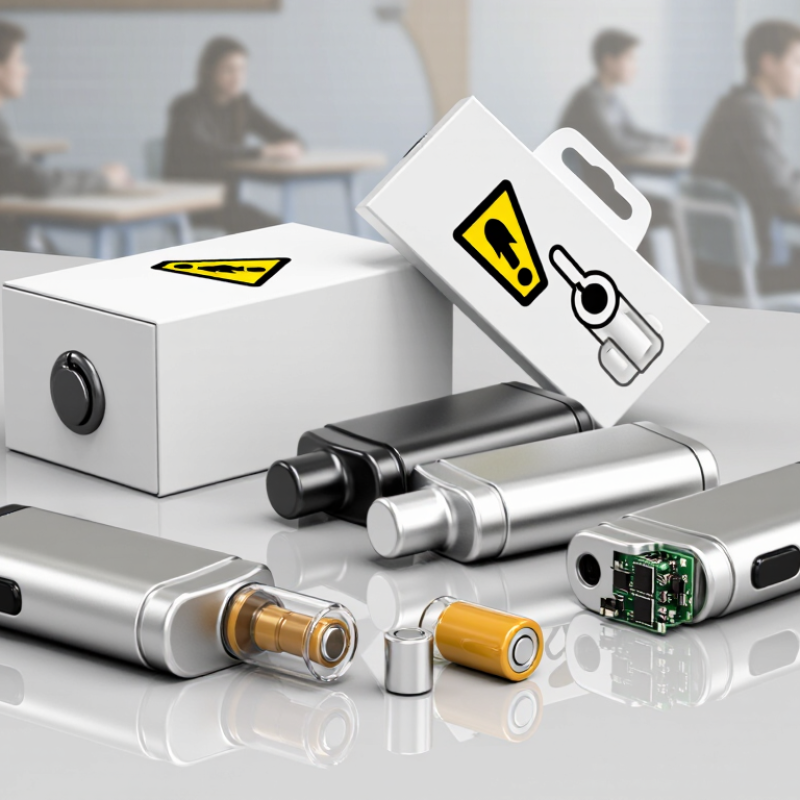
7 Packaging, warnings, and battery transport Check market-specific warning and child-resistant packaging rules. EU rules require nicotine-containing e-cigarettes and refill containers to be child-resistant and tamper-proof and to be protected against breakage and leakage. For products containing lithium batteries, verify applicable transport testing and documentation before shipment. Packaging test reports, approved label artwork, leakage and breakage checks, battery specifications, and transport test summaries. EU Tobacco Products Directive 2014/40/EU, Article 20(3)(g); UN Manual of Tests and Criteria, subsection 38.3 for lithium batteries.

Requirements vary by product and jurisdiction and may change. This checklist is for compliance planning only; confirm current rules with the relevant regulator or qualified local counsel before manufacturing, importing, or selling.

Prepare Compliant Packaging, Labels, and Marketing Materials

Vapor Disposable Cigarettes: 7 Global Compliance Tips

Prepare packaging, labels, and marketing materials before production begins. Requirements vary by country, state, and sales channel. A compliant design in one market may fail in another. Build a market-by-market compliance file. Keep the product name, ingredient information, nicotine disclosure, warnings, and importer details consistent. Use clear language and readable contrast. Tiny text creates avoidable problems.

Tips: Verify every label with current local rules and qualified regulatory counsel. Check warning placement, language requirements, recycling marks, batch codes, and age-restriction statements. Keep approval records, artwork versions, supplier certificates, and test reports together. Packaging should also protect the device during shipping. Measure panels physically. Digital previews can hide spacing errors.

Marketing materials require equal care. Avoid medical, therapeutic, lifestyle, or performance claims unless authorities specifically permit them. Do not use youth-oriented colors, cartoon imagery, gaming references, or messages that could attract minors. Targeting settings should include reliable age controls where required. Website pages, social posts, retail displays, and influencer scripts need the same review. One careless image can weaken an otherwise careful compliance program. I have found that teams often check the box and move on too quickly. That is a weakness worth admitting. Recheck translations, links, disclaimers, and regional product availability before publication. Rules change. Review dates should be visible, assigned, and documented.

Manage Importation, Sales, Records, and Regulatory Updates

Vapor Disposable Cigarettes: 7 Global Compliance Tips

Importation starts with product classification. Confirm whether each disposable vapor product is regulated as a tobacco, nicotine, consumer, or medical item in the destination market. Check permitted ingredients, electrical safety documents, packaging rules, and customs codes before shipping. One missing certificate can hold a pallet for weeks. Use an experienced customs broker, but verify their advice against official government sources.

Sales controls must match local requirements. Apply reliable age verification online and at physical points of sale. Keep health warnings, nicotine information, batch details, and disposal instructions visible on the package. Review advertising content carefully; claims about safety, health, or lifestyle may create serious risk. Tax registration and invoicing should be checked before the first transaction. Rules differ sharply between neighboring countries.

Maintain records for imports, suppliers, test reports, complaints, recalls, and customer-age checks. Store documents securely, with clear retention periods and access controls. A spreadsheet can still be wrong. Reconcile inventory against invoices every month. Assign one trained person to monitor regulatory updates, customs notices, and product restrictions. Record the review date and the action taken. This routine is practical, although it can expose gaps in staff training or outdated procedures. Correct them promptly, and document why the correction was made.

X
0
    0
    Your Basket
    Your basket is emptyReturn to Shop