How to Source One Time Use Vapes Globally and Legally?
Sourcing one time use vapes globally and legally requires more than comparing factory prices. It requires documented compliance at every stage. Product classification, nicotine limits, ingredients, packaging, labeling, age controls, recycling duties, and advertising rules can differ sharply between markets. The World Health Organization reported approximately 1.25 billion adult tobacco users worldwide in 2022, but vaping regulations remain fragmented. That fragmentation creates commercial opportunity and compliance risk.
A responsible sourcing process should begin with the destination country, not the supplier catalogue. Importers should verify manufacturing licenses, laboratory test reports, batch records, certificates of analysis, and traceable nicotine documentation. In the European Union, suppliers may need to address Tobacco Products Directive requirements and national notification systems. In the United States, products may require authorization from the Food and Drug Administration. Requirements can change.
Evidence matters.
Vaping researcher Dr. Konstantinos Farsalinos has stated, “E-cigarettes are not harmless, but they are much less harmful than smoking.” That distinction should not become a marketing shortcut. Public-health evidence remains mixed, especially for disposable formats and waste impacts. The WHO and national regulators continue to emphasize youth protection, product safety, and uncertain long-term effects. A credible sourcing strategy therefore uses independent testing, conservative claims, and written legal review in each market. Suppliers should also provide clear disposal instructions for batteries and electronic components. Some businesses treat these steps as paperwork. They are not. A missing document, inaccurate label, or changed rule can stop a shipment. No guide can replace local legal advice, and that limitation deserves open recognition.
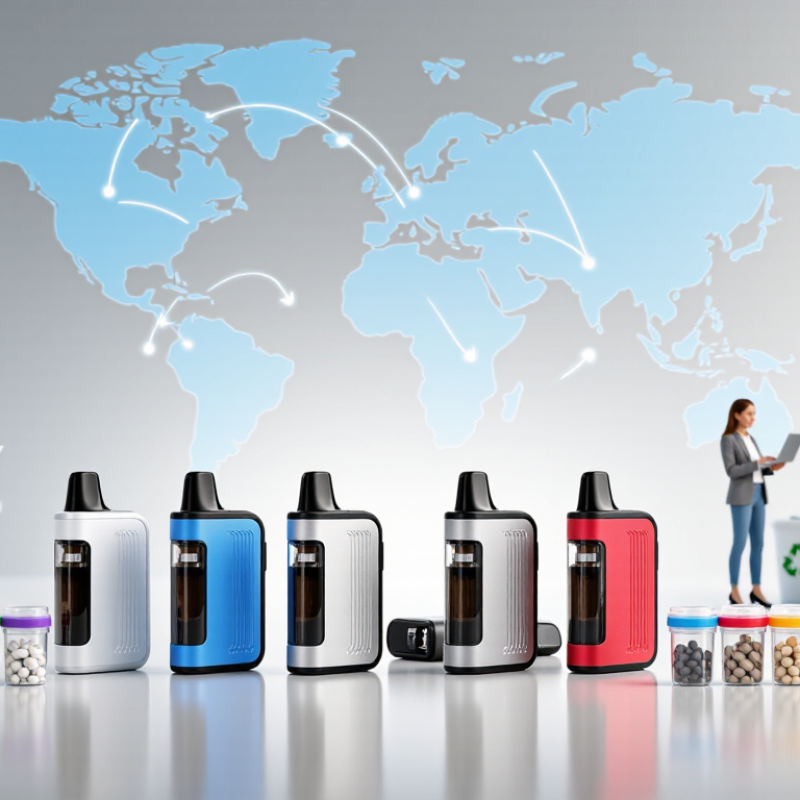
Map Target Markets: WHO Reports 74 Countries Without ENDS Regulation
Global sourcing of one-time-use vapes begins with market mapping, not supplier outreach. WHO reports that 74 countries have no specific regulation for electronic nicotine delivery systems (ENDS). That absence is not permission. It may signal uncertainty, pending legislation, or reliance on general tobacco, consumer-product, or pharmaceutical rules. A practical map should record national, regional, and municipal requirements in one dated compliance file.
For each target market, verify import eligibility, nicotine limits, packaging language, health warnings, age controls, advertising restrictions, battery transport rules, and waste obligations. Ask regulators or qualified counsel for written guidance when the law is unclear. Suppliers should provide batch records, laboratory reports, ingredient disclosures, safety data, and proof of authorised distribution. Check every document against the shipment, including labels and quantities. Small mismatches can stop customs clearance.
An experienced sourcing team also screens warehouses, payment routes, and logistics partners for traceability. Never treat a low price as evidence of compliance. A product may meet one country’s standard yet fail another’s testing or recycling requirements. Requirements change quickly. Recheck before each purchase order. This process is slower than informal sourcing, and mistakes still happen. That is worth admitting. A defensible decision may be to exclude a market until rules become clear, especially where disposable products face environmental or public-health restrictions.
How to Source One-Time-Use Vapes Globally and Legally?
Target-market indicator: countries without specific ENDS regulation
WHO reports that 74 countries had no specific regulation for electronic nicotine delivery systems (ENDS).
The absence of ENDS regulation does not automatically mean that one-time-use vapes may be imported, sold, or marketed legally; businesses should verify national product, customs, tax, age-verification, advertising, waste, and public-health requirements before entering any market.
Source: World Health Organization, figure cited in the accompanying article.
Set Product Limits: EU TPD Caps Nicotine at 20 mg/mL and Tanks at 2 mL
Global sourcing of one-time-use vapes begins with product limits, not supplier promises. Under the EU Tobacco Products Directive 2014/40/EU, nicotine liquid cannot exceed 20 mg/mL. Cartridges and tanks are capped at 2 mL, while refill containers cannot exceed 10 mL. These figures should appear in technical files, not only on cartons.
Measure everything.
The European Commission requires manufacturers and importers to submit product information before market placement, including ingredients, emissions, nicotine delivery, and safety details. The European Commission’s 2023 report on the directive also highlights continuing regulatory differences across member states. A product accepted in one country may still need separate checks elsewhere. That is where many sourcing plans become unreliable.
Use independent laboratory testing for nicotine concentration, leak resistance, battery safety, and child-resistant packaging. The WHO Report on the Global Tobacco Epidemic 2023 records that more than 80 countries regulate electronic nicotine products through different legal approaches. Therefore, a global purchase order should name each destination, limit, and responsible importer. Keep batch records and certificates linked to the exact model.
One practical weakness remains. Testing one sample may not represent every production batch. Require retesting after formulation, coil, battery, or packaging changes. Confirm the latest national rules before shipping, because EU guidance and enforcement can develop unevenly. Legal sourcing is slower, but undocumented speed creates expensive uncertainty.
Audit Suppliers with ISO 9001, COAs, and Independent Nicotine Testing
How to Source One Time Use Vapes Globally and Legally?
A compliant sourcing process begins with supplier verification, not attractive pricing. Request a current ISO 9001 certificate and confirm its issuing body, scope, and validity. ISO 9001 shows controlled processes, but it does not prove product safety or legal market access. Check whether the certificate covers the actual manufacturing site. Some suppliers outsource production without making this clear.
Ask for a Certificate of Analysis for every production batch. It should identify the batch number, testing date, sample method, and laboratory. Review nicotine concentration, prohibited contaminants, heavy metals, and liquid composition. Independent nicotine testing adds credibility, especially when the supplier’s internal report looks unusually perfect. Use an accredited laboratory where possible. Compare its result with the COA, not just the supplier’s brochure.
Traceability matters. Match the device label, packaging, batch record, and shipping documents. Confirm age-control procedures, required warnings, recycling obligations, and market-specific registration before placing an order. Legal rules differ widely, and a product accepted in one market may fail another. Do not rely on verbal assurances. Keep signed records.
No audit is perfect. A polished factory can still have weak controls. Small documentation gaps deserve questions, not automatic rejection. Suppliers should explain corrective actions and provide evidence later. Independent testing also has limits when sampling is too small. That is easy to overlook. A careful buyer reviews the process repeatedly, especially after formula, component, or factory changes.
 Fast Delivery & Dispatch