icon4

Free Delivery On Orders Over £20

NV products are only for people over the age of 18 years who either smoke or vape
Basket: 0 items

Top Embedded Tablets for Industrial Use in 2026

Industrial tablets face a harder day than office devices. They sit beside vibrating presses, dusty conveyors, and operators wearing work gloves. For 2026, this guide compares Embedded Tablet options by the conditions they can realistically handle—not by headline specifications alone. A bright display matters near a loading-bay door. Sealed connectors matter where washdown or fine dust is routine. Fanless designs can reduce moving parts, though they may still need careful thermal planning.

Embedded-systems consultant Jack Ganssle’s reliability guidance can be paraphrased this way: “Build reliability into the design; do not assume it later.” This is a paraphrase, not a verbatim quotation. It is a useful lens for comparing processors, operating temperature ranges, mounting choices, and long-term support. A fast chip is not automatically the right one. Neither is the highest ingress-protection rating, if the installation never faces water. Small details count: cable clearance behind a panel, readable text under glare, and whether a technician can replace a unit without dismantling a cabinet.

The shortlist considers these trade-offs alongside touch performance, connectivity, serviceability, and vendor documentation. No single model fits every plant. Some specifications also look clearer on paper than they prove in daily operation. Where evidence is limited, that uncertainty deserves attention. The aim is practical: help buyers identify tablets suited to their environment, then verify fit with a real mounting and workflow test before committing.
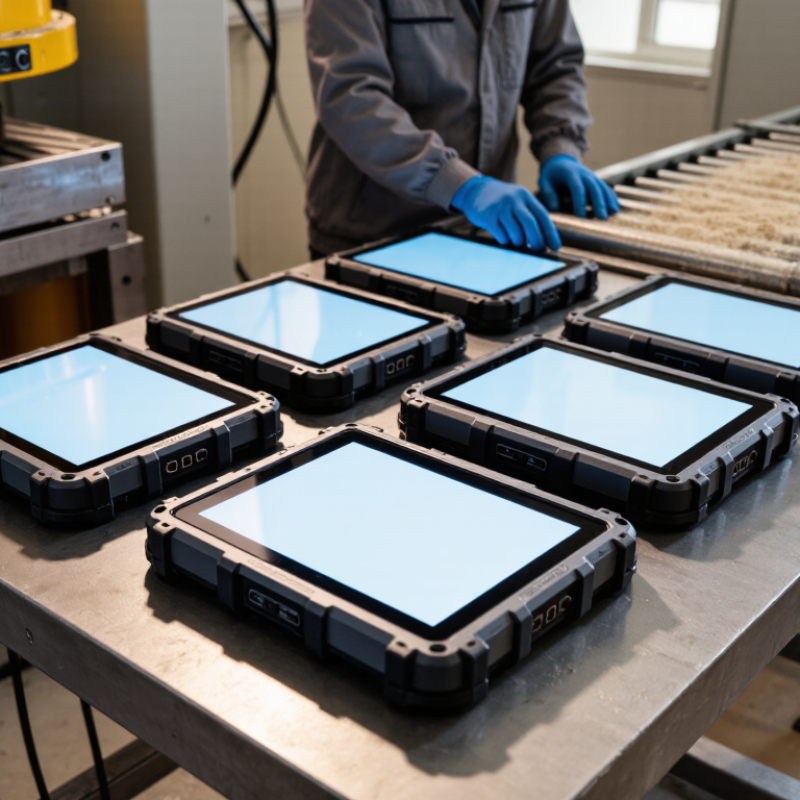
Top Embedded Tablets for Industrial Use in 2026

What Defines an Embedded Tablet for Industrial Use in 2026

Top Embedded Tablets for Industrial Use in 2026

What Defines an Embedded Tablet for Industrial Use in 2026

An embedded industrial tablet is designed for fixed or semi-fixed work, not occasional office use. It connects operators to machinery, production software, and sensors at the point of work. Look for a sealed, fanless design, stable mounting, and ports suited to the installation. A bright display should remain readable beside a sunlit loading bay or under harsh factory lighting. A drop matters. So do vibration, dust, glove use, and temperature changes. “Rugged” alone is vague; check the device’s tested limits against the actual site.

IoT Analytics’ State of IoT 2024 report estimated 16.6 billion connected IoT devices at the end of 2023 and projected 18.8 billion by the end of 2024. That growth makes reliable integration more important, but a tablet is only one part of the system. Verify wireless coverage, supported protocols, security updates, and lifecycle commitments before deployment. A fast processor cannot fix a weak network. Nor can a bright screen compensate for awkward mounting. These details are easy to overlook.

Key Performance and Environmental Requirements

For industrial use in 2026, an embedded tablet must sustain workloads, not just run a fast demo. Check processor performance under continuous load, available memory, storage endurance, and interface options such as serial ports and isolated I/O. A bright display matters near factory windows; around 1,000 nits can improve readability in strong ambient light. Test it with the actual interface and gloves. Small details matter.

Environmental ratings need careful interpretation. IEC 60529 defines IP65 as dust-tight protection and resistance to water jets; it does not mean submersion protection. IEC 60068-2-27 describes shock testing, while IEC 60068-2-6 covers vibration. These standards offer useful test frameworks, but a rating alone cannot predict years beside a vibrating motor. Set operating-temperature limits from the installation site, then confirm the device was tested across that range. Dust, condensation, and repeated temperature changes can expose weak seals or connectors.

Tips: Request test conditions, not just ratings. Check sunlight readability, glove response, connector retention, and fanless thermal performance under sustained load. If possible, run a pilot beside the machine for several shifts. A short test can miss slow heat buildup. That uncertainty deserves attention.

Core Hardware and Connectivity Features

An industrial tablet’s processor should match its workload, not just look impressive on a specification sheet. Data logging and equipment dashboards may need modest computing power, while local image processing demands more memory and storage. Heat is relentless. Check how the unit handles sustained operation inside a warm enclosure, where ventilation may be limited.

The display matters just as much. A bright panel can remain readable near a factory window, and projected capacitive touch may work with gloves only if the design supports it. Ask for test conditions, not vague claims. Sealed enclosures help resist dust and splashes, but connectors and mounting points can still become weak spots. Small details matter. A loose cable can interrupt a shift.

Connectivity should fit the machines already on site. Ethernet offers a stable wired link; Wi-Fi is useful where cables are impractical, though metal walls can weaken coverage. Cellular support may help in remote areas, but signal quality needs checking at the installation point. For legacy equipment, serial ports can be more useful than another USB socket. Confirm voltage range, connector retention, and whether serial lines are isolated when electrical noise is present. Specifications rarely reveal every vibration, glare, or cable-routing problem, so evaluate the tablet in its intended mounting position before choosing a fleet standard.

Leading Embedded Tablet Categories for Industrial Applications

Industrial embedded tablets fall into several practical categories. Panel-mount models suit fixed stations, where operators tap recipes beside machines. Rugged mobile tablets support inspections across dusty floors and cold storage areas. Vehicle-mounted terminals prioritize secure cradles, bright displays, and readable maps.

Gloves change everything.

The International Federation of Robotics reported 4,281,585 industrial robots operating worldwide in 2023, a 10% increase from 2022. That growing automation base makes reliable human-machine interfaces increasingly important.

Fixed panel tablets can display alarms and production data continuously. Mobile units let technicians record faults beside the equipment, rather than from a distant desk.

The Deloitte 2024 Smart Manufacturing Survey found that 86% of surveyed manufacturers viewed smart manufacturing as a likely competitiveness driver within five years.

For selection, match the category to the actual workflow. Check touch response with gloves, screen visibility under harsh lighting, and resistance to vibration. Confirm that mounting, ports, and operating temperature suit the installation.

Dust matters.

A sealed enclosure is useful, but it cannot fix poor cable routing or awkward placement.

One compromise is easy to miss: larger screens improve readability, yet can obstruct a cramped control panel. Test the device in its intended location before specifying it.

How to Choose a Tablet for a Specific Industrial Setting

Choosing an embedded tablet starts with the worksite, not the screen size. A unit mounted beside a packaging line faces vibration, dust, and frequent glove use. A tablet inside a chilled warehouse has different demands: low-temperature operation, readable labels, and reliable wireless coverage between metal racks. Heat matters. Record the actual temperature range and cleaning routine before comparing specifications.

Check how the tablet will be installed and connected. A flush-mounted panel may need a sealed front, while an arm-mounted unit needs secure brackets and strain relief for power and data cables. List the required ports, network options, scanners, and sensors. Then confirm that the operating system supports the software already used on the production floor. A small mismatch can delay a rollout more than a modest processor ever will.

Readability deserves an on-site test. Reflections from overhead lights can hide alerts, even on a bright display. Try the tablet at its intended angle, wearing the gloves operators use, and enter a few real production records. Test it there. Also ask how repairs, spare units, and software updates will be handled over several years. Specifications help, but they do not reveal every awkward cable route or poor mounting position. That part is easy to overlook.

X
0
    0
    Your Basket
    Your basket is emptyReturn to Shop