2026 How to Safely Throw Away E Cigarettes and Reduce Waste?
E-cigarettes have become widely popular, raising concerns about their disposal. Many users ask, "How to throw away e cigarettes safely?" Disposing of these items properly is crucial. Often, people overlook the environmental impact of e-cigarettes. E-waste is a growing issue, and e-cigarettes contribute to it.
These devices contain harmful components that can pollute our environment. If you just toss them in the trash, toxins might leach into the soil and water. Many don’t realize that e-cigarettes need special handling. It’s easy to neglect this responsibility, but we should consider the consequences of our choices.
Reducing waste starts with understanding proper disposal methods. There are recycling programs available for e-cigarettes. Finding a local facility or event can be challenging but necessary. Embracing eco-friendly practices can make a difference. Awareness can lead to better habits in our communities. Reflecting on how we throw away e cigarettes is essential for a healthier planet.

Best Practices for Safe Disposal of E-Cigarettes
E-cigarettes have gained popularity, but their disposal poses environmental challenges. According to the World Health Organization, proper disposal is crucial. Many users are unaware that e-cigarettes contain hazardous materials like lithium batteries and nicotine. These components can leak and contaminate soil and water if discarded improperly.
Best practices for safe disposal include returning e-cigarettes to designated electronic waste recycling centers. Over 70% of e-waste ends up in landfills, contributing to environmental pollution. A recent study highlighted that only 15% of e-cigarette users knew about recycling options for their devices. This gap in awareness calls for better education on responsible disposal methods.
Community programs can help. Local initiatives can organize collection events to promote safe disposal. Collaborations with recycling experts could boost awareness. Meanwhile, e-cigarette users should consider switching to reusable alternatives, reducing their overall waste footprint. Engaging with these practices might take effort, but the impact on the environment can be significant.
Understanding the Environmental Impact of E-Cigarette Waste
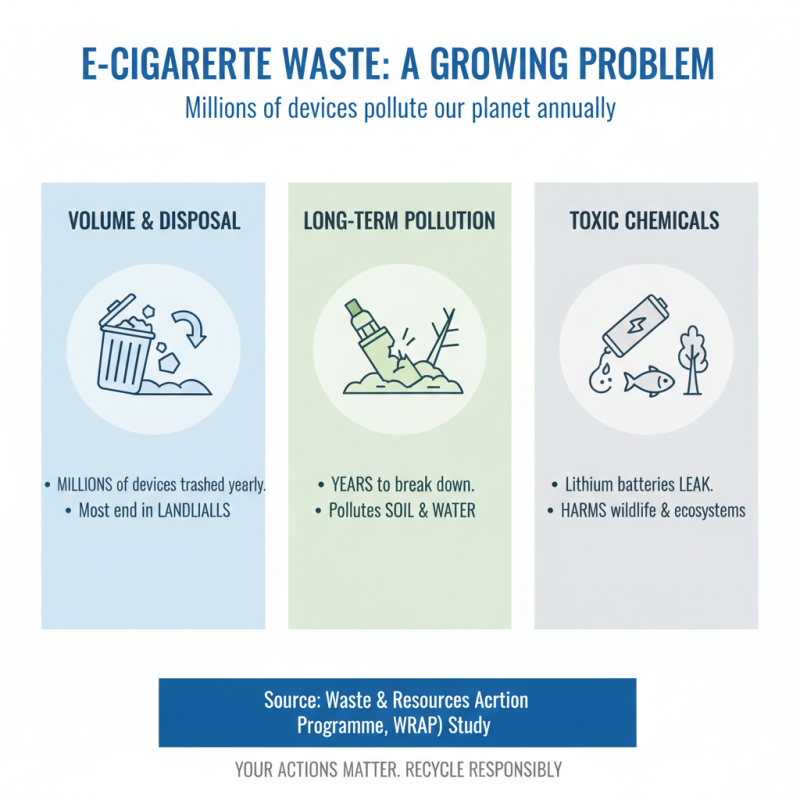
E-cigarette waste is a growing environmental concern. A study from the Waste & Resources Action Programme found that each year, millions of e-cigarette devices end up in landfills. These devices can take years to break down, polluting soil and water. The lithium batteries used in many e-cigarettes can leak harmful chemicals, affecting wildlife and ecosystems.
Most users are unaware of the proper disposal methods for e-cigarettes. This lack of knowledge contributes to the problem. One tip is to always remove the battery before disposal, as they require special recycling. Follow local guidelines for disposing of batteries separately. You can also seek out specialized e-waste recycling programs. Some cities offer collection events for electronic devices, including e-cigarettes.
Improper disposal leads to significant environmental issues. Another study indicated that e-waste can contain dangerous materials like cadmium and lead. These substances can seep into the environment. It's crucial to be mindful of these impacts. Every effort counts. If you're unsure about local disposal options, reach out to your community for guidance. Be part of the solution, not the problem.
Effective Recycling Methods for E-Cigarette Components
E-cigarettes have become popular, but they also contribute to electronic waste. A report from the EPA indicates that cigarette-related waste accounts for about 40 million pounds annually in the U.S. alone. Many users don't consider how to dispose of these devices properly. The components, like lithium batteries and plastic, are often not recycled correctly.
Recycling methods are crucial for e-cigarette components. Many recycling centers accept batteries. Proper disposal prevents toxic materials from contaminating the environment. According to a recent study, over 80% of lithium batteries can be recycled. However, the challenge lies in user awareness. Many consumers throw these devices in regular trash, which escalates the waste problem.
Creating awareness around disposal is necessary. Users should look for designated drop-off locations for batteries and devices. Additionally, some companies are introducing mail-back programs for proper recycling. Yet, these options are often underutilized. A culture of responsible disposal must be fostered to make a real difference.
Local Regulations and Guidelines for E-Cigarette Disposal
When it comes to disposing of e-cigarettes, local regulations often dictate the best approach. Many areas classify e-cigarettes as electronic waste. They contain batteries and other components that can be harmful if thrown away carelessly. Some localities have specific drop-off sites for these devices. Research your community’s disposal options to avoid pollution.
Disregarding proper disposal methods can lead to environmental harm. E-cigarette batteries can leak harmful chemicals into soil and water. It's concerning to see how many people still treat these devices as regular trash. You might find yourself guilty of this too. Simple steps can make a difference. Take time to find an e-waste recycling program nearby.
Recycling e-cigarettes is becoming more accessible. Some manufacturers even provide take-back programs. This reduces the landfill burden and promotes responsible behavior. Consider looking for local guidelines and resources. Understanding these can help you make better decisions about e-cigarettes. Reflect on your habits and improve your choices. It’s not just about you; it’s about the community and the environment.
2026 How to Safely Throw Away E Cigarettes and Reduce Waste?
| Disposal Method |
Description |
Local Regulations |
Recycling Availability |
| Regular Trash |
E-cigarettes can be disposed of in the regular waste bin when guidelines allow. |
Check local municipality guidelines to confirm. |
Not typically recycled. |
| Hazardous Waste Facility |
Take e-cigarettes to a facility that handles hazardous waste. |
Required in many jurisdictions for battery disposal. |
Yes, batteries and components can be recycled. |
| Retail Recycling Programs |
Some retailers have take-back programs for e-cig ingredients. |
Consult local stores for participation. |
Yes, often recycling components. |
| Community Collection Events |
Participate in scheduled events for safe disposal. |
Advertised by local governments or NGOs. |
Materials collected may be recycled. |
Innovative Solutions to Reduce E-Cigarette Waste in Communities
E-cigarette waste is a growing concern in many communities. Many users are unsure how to properly dispose of their devices. This leads to pollution and potential hazards. Innovative solutions are needed to tackle this problem effectively. One idea is to create designated collection points in local areas. These can be easily accessible and encourage proper disposal. Local businesses can participate by offering drop-off bins.
Education plays a critical role in reducing waste. Informing users about the environmental impact of e-cigarettes can motivate behavioral changes. Workshops or campaigns can showcase the proper disposal methods. Community involvement is crucial here. Groups can organize clean-up events where e-cigarette waste is gathered and discarded safely.
Another option is to explore recycling programs for e-cigarette components. Batteries, plastic, and metal parts can often be recycled. This would reduce the burden on landfills. Some community organizations are already testing these programs with promising results. However, awareness remains limited, and more effort is needed. Without a concerted push, the issue may continue to worsen.
This chart represents the various categories of e-cigarette waste generated in communities. It highlights the importance of implementing proper disposal methods and increasing recycling efforts to reduce overall waste.
 Fast Delivery & Dispatch