icon4

Free Delivery On Orders Over £20

NV products are only for people over the age of 18 years who either smoke or vape
Basket: 0 items

What Is Eyelash Serum and How Does It Work?

Eyelash Serum has become a popular part of modern beauty routines. Small bottles promise longer, fuller-looking lashes, but their formulas can differ greatly. Some products condition lashes with peptides, panthenol, biotin, or plant extracts. Others contain ingredients that influence the eyelash growth cycle. The result depends on the formula, application habits, and individual biology. It is not instant magic.

Board-certified ophthalmologist Dr. Diane Hilal-Campo has stated, “The only FDA-approved eyelash growth product is Latisse, or bimatoprost.” This distinction matters. Many over-the-counter products are cosmetics, not approved treatments for eyelash growth. They may reduce dryness or breakage, helping lashes appear healthier. They may not create dramatic new growth. The label can still confuse me, especially when “longer-looking” sounds like “clinically proven.”

This guide examines what Eyelash Serum is, how it works, and what users should realistically expect. It will discuss the lash growth cycle, common active ingredients, application near the delicate eye area, and possible side effects. Results often require consistent use for several weeks. Some users notice little change.

That is normal.

Eye redness, itching, swelling, or skin darkening should not be ignored. Stop using the product and seek professional advice when symptoms continue. People with eye disease, allergies, or recent eye procedures should consult an eye-care professional first. A careful routine matters more than a dramatic promise. Even experienced users can apply too much or place serum directly into the eye.
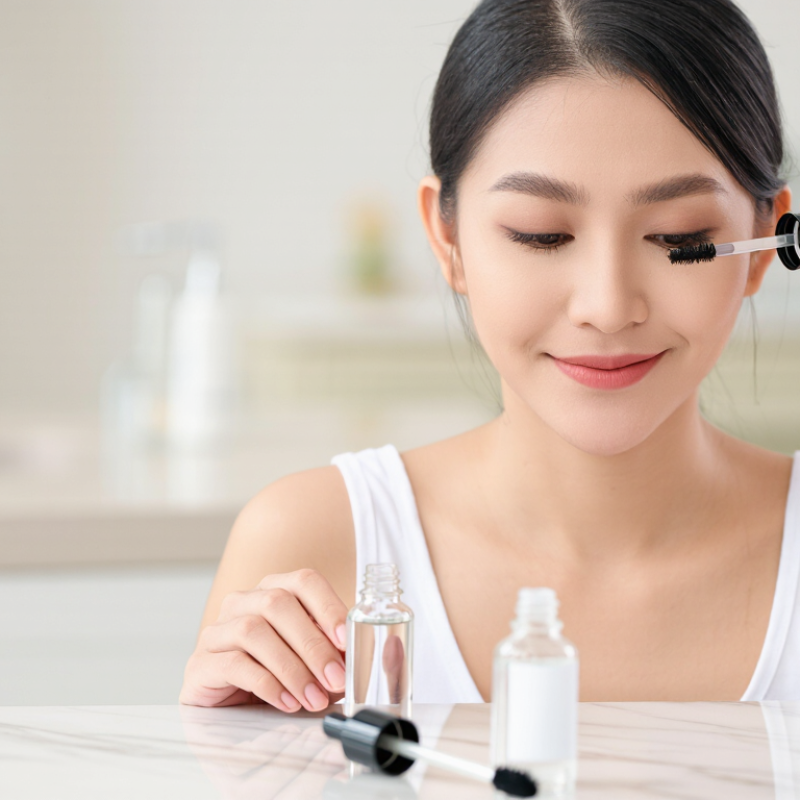
What Is Eyelash Serum and How Does It Work?

What Is Eyelash Serum and What Is It Designed to Do?

Eyelash serum is a leave-on product designed to support the appearance and condition of eyelashes. Most cosmetic formulas contain peptides, panthenol, conditioning agents, or humectants. They may reduce dryness and breakage, making lashes look darker, longer, or fuller. They do not all stimulate new growth. That distinction matters.

A 2024 Grand View Research market report estimated the global eyelash serum market at about USD 1.1 billion in 2023, with projected growth of roughly 6.4% annually through 2030. This commercial demand reflects interest, not proof of equal effectiveness. I would not call every serum a growth treatment. Some formulas mainly coat the lash.

Clinical evidence is stronger for prescription treatment than for ordinary cosmetics. In an FDA-reviewed study of bimatoprost, reported after 16 weeks, 25% of participants showed increased lash length, 106% showed greater fullness, and 18% showed darker lashes. Results varied, and the product required medical supervision. The FDA also explains that cosmetic products generally do not receive premarket approval, so ingredient quality and safety testing can differ. Use a clean applicator, avoid the waterline, and stop if redness, swelling, or eye discomfort appears. Small mistakes matter.


How Eyelash Serum Ingredients Interact With the Lash Growth Cycle

What Is Eyelash Serum and How Does It Work?

Eyelash serum works within the natural lash growth cycle, rather than creating new follicles. Each lash moves through anagen, the active growth phase, followed by catagen and telogen. This cycle can last several weeks or months, depending on the individual. A serum cannot make every lash grow at the same speed. That expectation needs reconsidering.

Ingredients interact with lashes in different ways. Peptides may support the appearance of stronger, fuller lashes, while panthenol and conditioning agents help reduce dryness and breakage. These effects mainly protect the visible lash shaft. They do not necessarily extend the growth phase. Some formulas may contain prostaglandin-related compounds, which can influence the growth cycle more directly. However, they may also cause irritation or changes around the eyes. Ingredient evidence matters more than attractive packaging.

Consistency is essential. Apply a thin line to clean, dry skin along the upper lash line, avoiding the eye surface. Do not use extra product to speed results. It will not work faster. Results often require several weeks because new growth must move through its cycle. Stop using the serum if persistent redness, swelling, itching, or vision changes appear, and seek professional medical advice. Individual results vary, and even careful routines cannot overcome damaged follicles, rubbing, or untreated eyelid conditions.

What Is Eyelash Serum and How Does It Work?

How Eyelash Serum Ingredients Interact With the Lash Growth Cycle

Eyelashes grow through three repeating phases. The anagen phase is the active growth period and typically lasts about 30–45 days. Catagen is a short transition phase of approximately 15 days, while telogen is the resting and shedding phase, which commonly lasts around 100 days. These durations are approximate and vary between individuals.

Eyelash serums may contain conditioning ingredients, moisturizers, amino acids, peptides, or other cosmetic compounds designed to improve the appearance and flexibility of lashes. These ingredients mainly support the lash fiber and surrounding skin; they should not be assumed to extend the anagen phase or produce clinically proven growth unless supported by specific clinical evidence.

Chart values represent commonly reported approximate eyelash-cycle durations: anagen 30–45 days, catagen about 15 days, and telogen about 100 days.

The Step-by-Step Process of Applying Eyelash Serum

Eyelash serum is a leave-on cosmetic designed to condition lashes and support a healthier-looking appearance.

Its ingredients may include peptides, humectants, vitamins, or botanical extracts.

Results are not instant. EyeWiki reports that the eyelash growth phase usually lasts about 30–45 days, while the resting phase can continue for several months.

Patience matters here.

The application process should stay simple.

Wash your face and remove every trace of eye makeup. Dry the skin completely.

Use the applicator once along the upper lash line, like drawing a very thin eyeliner line.

Do not coat the lower lash line unless the directions clearly permit it. Keep the serum away from the eye itself.

Wait until it dries before applying makeup.

Less is safer.

Use the serum consistently, usually once daily, and follow its specific instructions.

Avoid sharing the applicator. Replace it if the product changes smell, color, or texture.

The U.S. Food and Drug Administration explains that cosmetics generally do not receive premarket approval, so ingredient checking remains important.

Stop using the serum if burning, swelling, pain, or persistent redness appears.

A common mistake is applying extra product for faster growth. That usually increases exposure, not effectiveness.

Even careful routines can irritate sensitive skin, so a small patch test is a sensible precaution.

Different Types of Eyelash Serums and Their Key Ingredients

Eyelash serum is a leave-on product designed to condition lashes or support their visible growth. Its effect depends heavily on the formula. Peptide-based serums often contain myristoyl pentapeptide-17 or biotinoyl tripeptide-1. These ingredients may help lashes appear stronger and less brittle. Panthenol, hyaluronic acid, and plant oils mainly improve softness and flexibility. They do not automatically create new follicles.

Prostaglandin-analogue formulas work differently. They can lengthen the growth phase of eyelashes, but they require greater caution. U.S. prescribing information for an approved ophthalmic treatment reported about 25% greater lash length and 106% greater fullness after 16 weeks. That evidence is stronger than most cosmetic claims. However, irritation, eyelid darkening, and changes around the eyes remain possible. Medical guidance matters.

Botanical serums may include castor oil, green tea extract, or ginseng. Evidence is uneven. I would not treat every “natural” claim as proven. A 2024 Grand View Research market analysis estimated the global eyelash serum market at roughly USD 1.1 billion in 2023, reflecting strong consumer demand rather than equal clinical proof. Check the ingredient list, applicator hygiene, and independent testing. Avoid applying serum inside the eye. Results may also reflect reduced lash breakage, not faster growth.

What Is Eyelash Serum and How Does It Work? Different Types of Eyelash Serums and Their Key Ingredients
Serum Type How It Works Common Key Ingredients Expected Benefit Evidence and Typical Use Important Safety Considerations
Prostaglandin-Analogue Serum May influence the eyelash growth cycle by extending the anagen, or active-growth, phase of the lash follicle. Bimatoprost or related prostaglandin analogues Can increase eyelash length, thickness, and darkness in people with inadequate eyelashes. Strongest clinical evidence among lash-growth products. Bimatoprost is a prescription treatment for eyelash hypotrichosis in some countries. May cause eye redness, itching, skin darkening near the application area, or changes in iris pigmentation. Use only as directed by a qualified healthcare professional.
Peptide-Based Serum Peptides are short chains of amino acids that may support the appearance and condition of the lash fiber or surrounding skin. Signal peptides, copper peptides, or biomimetic peptide blends May make lashes look fuller, stronger, or less prone to breakage over time. Often used in cosmetic formulas. Evidence for substantial new lash growth is generally more limited than for prescription treatments. Check the complete ingredient list and stop use if burning, swelling, rash, or persistent irritation develops.
Conditioning Serum Coats and moisturizes the lash shaft, helping reduce dryness, friction, and mechanical breakage. Panthenol, hyaluronic acid, glycerin, amino acids, and plant-derived oils Can improve softness, shine, flexibility, and the visual appearance of lash density. Benefits are mainly cosmetic and protective. Conditioning does not necessarily extend the follicle’s growth phase. Avoid getting the product directly into the eye. Oil-containing formulas may temporarily blur vision or irritate sensitive eyes.
Castor-Oil-Based Serum Forms an occlusive layer that may help retain moisture and reduce surface dryness. Castor oil, hydrogenated castor oil, or blends with other emollients May make lashes appear glossier and better conditioned. Widely used in cosmetic products, but robust clinical evidence that castor oil directly stimulates eyelash growth is lacking. Can cause irritation or allergic contact dermatitis in some users. Keep the applicator clean and avoid sharing it.
Vitamin and Provitamin Serum Provides conditioning agents that may support the surface quality of the lash fiber. Panthenol, tocopherol, vitamin A derivatives, or biotin May improve the feel and appearance of dry or fragile lashes. Topical vitamins may condition lashes, but evidence that they produce significant growth in otherwise healthy people is limited. Nutritional supplements help only when a deficiency exists. Vitamin A derivatives may irritate the eye area and may not be suitable during pregnancy. Do not assume a topical product corrects an underlying nutritional problem.
Botanical-Extract Serum Plant extracts may provide antioxidant, soothing, or conditioning effects depending on their formulation. Green tea extract, aloe vera, chamomile, ginseng, or other botanical extracts May help condition the lash line and improve the appearance of lashes. Results vary substantially by extract, concentration, and product quality. Evidence for direct lash growth is usually limited.
Lash-Fiber or Film-Forming Serum Creates a temporary film or attaches lightweight fibers to the lashes, producing an immediate visual effect rather than changing follicle growth. Cellulose fibers, acrylate polymers, film-formers, and conditioning agents Can make lashes look longer or thicker after application. Provides an instant, temporary cosmetic result. The effect generally disappears after cleansing or product removal. Remove gently to reduce traction and breakage. Avoid formulas that flake into the eye or cause discomfort while wearing contact lenses.

Safety Considerations, Possible Side Effects, and Expected Results

Eyelash serum is a cosmetic product applied near the lash line. Its ingredients may condition lashes, reduce breakage, or support the growth cycle. Results depend on the formula, application habits, and individual biology. Not every serum makes lashes grow. That distinction matters.

The eye area is delicate, so safety deserves more attention than dramatic photographs. Apply the serum only as directed, usually to clean, dry skin along the upper lash line. Keep the applicator clean, and never share it. Avoid contact with the eye itself. Stop using the product if burning, swelling, persistent redness, pain, or blurred vision appears. A healthcare professional should assess symptoms that continue or worsen. People with eye disease, recent eye procedures, allergies, or pregnancy concerns should seek medical advice first. “Natural” does not automatically mean safer.

Some growth-active formulas may cause eyelid darkening or other changes around the eyes. These products deserve professional guidance. Some users notice softer, darker-looking, or less fragile lashes after several weeks. Growth-related changes often require consistent use through more than one lash cycle.

Results may fade after stopping, especially when the serum mainly provides conditioning. Do not apply extra product to speed things up. More is not better. Lighting, mascara, and lash position can distort comparisons, so simple photographs under similar conditions are more reliable. A careful routine is less exciting, but it is better than hopeful guessing.

X
0
    0
    Your Basket
    Your basket is emptyReturn to Shop