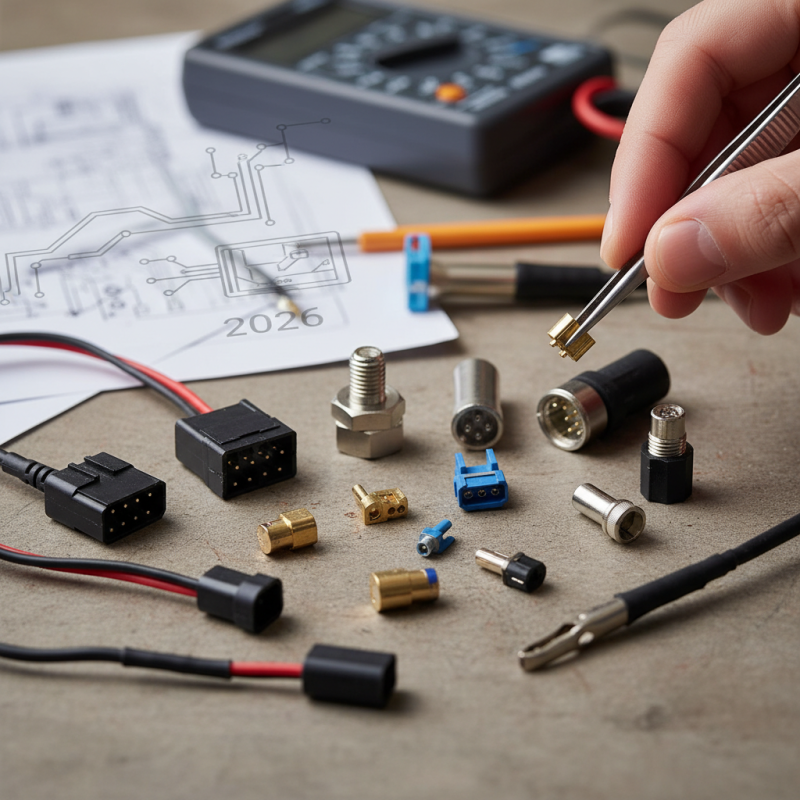
2026 How to Choose the Right Battery Connector for Your Needs?
Choosing the right Battery Connector can greatly impact your project's success. A battery connector ensures safe and efficient energy transfer between components. However, the variety of options can be overwhelming.
Consider the specific requirements of your application. Are you working on a portable device or a stationary installation? Knowing the environment and electrical demands will guide your selection.
Manufacturers often list specifications, but real-world experiences vary. Quality matters. A connector that works well in one scenario might fail in another. Don't overlook compatibility with existing components. Proper evaluation is crucial to avoid pitfalls and ensure reliability.
Overview of Battery Connector Types and Their Applications
Choosing the right battery connector can significantly impact performance and safety. Battery connectors come in various types and each type is suited for different applications. Understanding these options is crucial for making informed decisions.
There are several main types of battery connectors. The most common types include spade connectors, ring connectors, and Anderson connectors. According to industry reports, spade connectors are widely used in automotive settings due to their ease of installation. They can handle typical current ranges from 10A to 40A. Ring connectors, on the other hand, are useful for their secure connection, especially in high-vibration environments. These connectors generally handle higher currents, making them ideal for industrial applications.
Anderson connectors, often used in electric vehicles, have a unique design. They allow for quick connections and disconnections, enhancing efficiency. Reports suggest that these connectors can handle currents up to 350A. However, their complexity can present challenges. Users must ensure proper alignment during connection, which can sometimes lead to inefficiencies. Assessing these details will help in selecting the right type for specific needs.
Key Factors to Consider When Selecting Battery Connectors
Choosing the right battery connector is crucial for performance and safety. When selecting connectors, consider the current rating. It must match or exceed the requirements of your application. Insufficient rating can lead to overheating and failure.
Another essential factor is the connector size. Ensure it fits your battery and device snugly. Loose connectors can cause resistance issues. This results in energy loss and inefficiency. A tight fit also enhances safety by reducing the risk of accidental disconnections.
Tips: Always evaluate the material of the connector. Look for corrosion-resistant options for better longevity. Also, consider the environmental conditions where the connector will be used. Extreme temperatures and humidity can influence performance.
While compatibility with the battery type is important, prioritize ease of use. Protecting against accidental connections can be beneficial. Reflect on past experiences; connectors that seem perfect can sometimes be difficult to handle. Always keep your needs and experiences in mind as you choose.
Compatibility: Ensuring Battery and Connector Match Properly
When selecting a battery connector, compatibility is paramount. The connector must match the battery’s voltage and amperage ratings. Mismatched components can lead to performance issues or even safety hazards. According to a recent industry report, over 30% of battery-related failures stem from incompatible connectors. This emphasizes the importance of thorough research and understanding specifications before making a purchase.
Tips: Always check the technical datasheets. These documents provide crucial information about voltage ratings and physical dimensions.
In addition, consider the connector's environment. Some connectors are designed for specific temperatures or moisture levels. Using an unsuitable connector can lead to premature failure. Use of connectors that are resistant to corrosion is advisable, especially in harsh conditions.
Tips: Look for connectors with built-in sealing features. These can enhance durability significantly.
Compatibility isn’t just about matching numbers; it’s also about understanding the application. For example, electric vehicles require highly reliable connectors to ensure safety and efficiency. As technologies evolve, connectors must also adapt to meet new demands. This constant change creates opportunities and challenges in the industry.
2026 How to Choose the Right Battery Connector for Your Needs? - Compatibility: Ensuring Battery and Connector Match Properly
| Connector Type | Voltage Rating (V) | Current Rating (A) | Wire Gauge (AWG) | Material | Application |
| JST Connector | 3.7 | 2 | 22 | Plastic | Consumer Electronics |
| XT60 Connector | 22 | 60 | 10 | Nylon | RC Vehicles |
| Anderson Powerpole | 50 | 45 | 12 | Polycarbonate | Solar Applications |
| Deans Connector | 11 | 50 | 14 | Plastic | RC Hobby |
| Molex Connector | 5 | 3 | 24 | Polyester | Computers |
Safety Features and Quality Standards in Battery Connectors
When selecting a battery connector, safety features are paramount. Reports indicate that nearly 30% of battery failures are due to inadequate connectors. Poor connections can lead to overheating, which may cause fires. Therefore, ensuring that your connector meets recognized safety standards is essential.
One standard to consider is the IEC 60947-7. It addresses safety in electrical connectors. Connectors should also be tested for resistance to environmental hazards, including moisture and corrosion. A quality connector should exhibit reliability under various temperature conditions. Interestingly, many users overlook the significance of material composition. High-quality materials reduce the risk of failure.
In terms of quality assurance, certifications can provide peace of mind. However, not all certifications are created equal. Some may be based on outdated tests. It's crucial to research and verify the claims of safety certifications to ensure they are current and applicable. Remember, the trade-off between cost and reliability often leads to reflection. Cheaper options could lack necessary safety features, which might not be evident until a failure occurs. Making informed choices is pivotal when considering battery connectors.
Future Trends in Battery Connector Technology and Design
As we look toward the future of battery connector technology, several trends emerge. Advancements in electric vehicles and renewable energy systems drive demand for efficient connectors. Innovations focus on enhancing power density, improving durability, and ensuring ease of use. For example, modular designs are becoming popular. They allow users to customize their setups based on specific energy needs.
Safety is a primary concern too. Inadequate connectors can lead to overheating or failure. Designers are now exploring materials that are both lightweight and robust. This change aims to reduce risks while promoting efficiency. Wire insulation technology is also evolving, ensuring minimal energy loss during transmission. These improvements help meet the rigorous requirements of modern applications.
However, the journey to perfect battery connectors continues. The industry faces challenges in standardization and compatibility. As connectors become more advanced, users must ensure they select the right type for their systems. Understanding specifications can be daunting, especially for individuals unfamiliar with technical jargon. Education is vital in navigating these complexities and making informed decisions.
Battery Connector Types and Their Applications in 2026
 Fast Delivery & Dispatch