icon4

Free Delivery On Orders Over £20

NV products are only for people over the age of 18 years who either smoke or vape
Basket: 0 items

Why Choose Chinese Laid Scrims Mesh for Global Projects?

Choosing the right reinforcement material can influence a project’s strength, appearance, and installation speed. Chinese Laid Scrims Mesh has become a practical option for manufacturers, contractors, and distributors serving global markets. Its lightweight structure supports many products, including roofing membranes, insulation facings, flooring materials, and composite laminates.

It starts with consistency.

In real production environments, buyers usually examine more than price. They review yarn type, mesh spacing, tensile strength, roll width, coating compatibility, and packaging quality. These details matter when materials travel long distances or enter automated production lines. Experienced suppliers can provide technical data, sample rolls, and batch records for evaluation. Independent testing may also confirm performance under the intended conditions.

However, no material is perfect.

A scrim that performs well in a roofing membrane may not suit a flooring system. Adhesive selection, temperature changes, humidity, and handling methods can alter results. This is where careful communication becomes essential. Chinese manufacturers often offer flexible specifications, competitive production capacity, and export-oriented packaging. Still, buyers should verify quality systems, production records, inspection procedures, and delivery commitments before placing large orders.

Reliable sourcing depends on evidence, not assumptions. Clear drawings, agreed tolerances, product samples, and documented tests reduce avoidable misunderstandings. They also help engineers compare suppliers fairly. Chinese Laid Scrims Mesh may provide strong value for global projects, but its success depends on proper design and responsible quality control. A thoughtful evaluation can reveal both its advantages and its limitations.
Why Choose Chinese Laid Scrims Mesh for Global Projects?

What Is Chinese Laid Scrims Mesh?

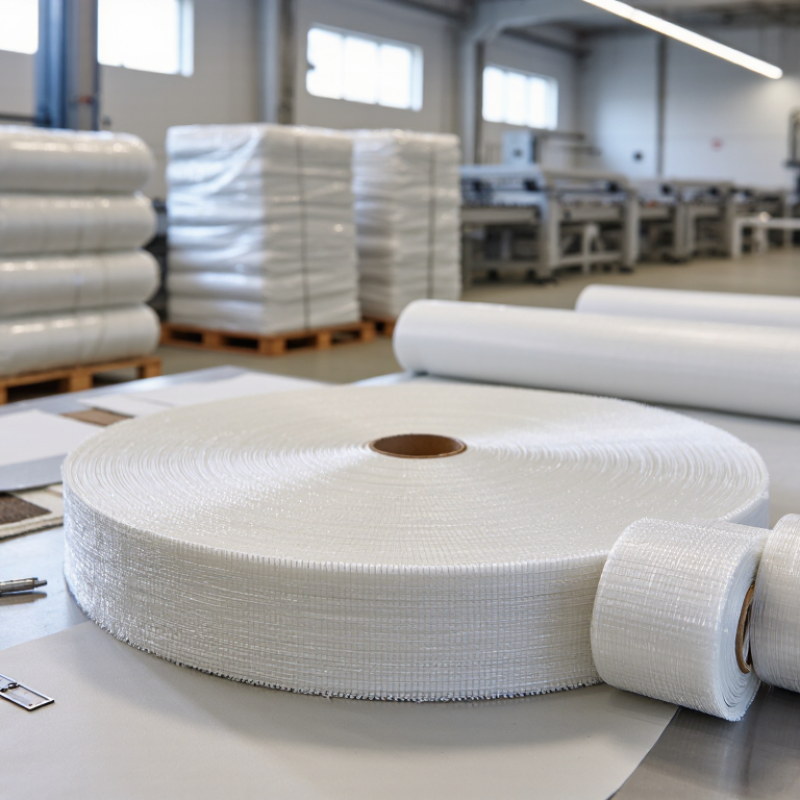
Chinese laid scrims mesh is an engineered reinforcement grid, not ordinary woven fabric. Manufacturers place warp and weft yarns in an open pattern, then bond intersections with adhesive. The structure stays flat and adds dimensional stability to membranes, insulation facings, flooring layers, and roofing materials. Common yarns include fiberglass, polyester, and high-strength polypropylene. Coatings may use acrylic, PVC, or similar polymers.

Factory origin matters because production scale supports consistent mesh counts, roll widths, and coating control. Grand View Research valued the global nonwoven fabrics market at about USD 53.5 billion in 2023, with continued growth expected through 2030. Laid scrims serve this wider materials ecosystem, although they are not themselves nonwovens. Smithers’ technical market reviews also emphasize lightweight reinforcement and process consistency as important performance drivers. These findings explain why international buyers examine tensile strength, elongation, GSM, and moisture resistance together.

In practical inspection, a good scrim should unwind smoothly and remain stable under light tension. Uneven bonding can appear as loose intersections or shiny adhesive spots. Small defects become larger problems during lamination. I have found that suppliers sometimes present tensile data without stating test direction or conditioning. That is incomplete evidence. Buyers should request test methods, sample records, and batch traceability. Chinese laid scrims mesh can be highly competitive, but price alone cannot prove reliability. Project temperature, adhesive compatibility, and installation handling still require testing. The material is simple to describe, yet surprisingly easy to specify poorly.

How Is Chinese Laid Scrims Mesh Manufactured?

Why Choose Chinese Laid Scrims Mesh for Global Projects?

Chinese laid scrims mesh is manufactured through controlled textile and coating processes. Production begins with selecting polyester, fiberglass, or polypropylene yarns for the project’s strength requirements. Technicians mount the yarns on creels and adjust tension before laying the warp and weft strands. The strands cross without traditional weaving, creating a lightweight reinforcement grid. This structure can support membranes, insulation facings, flooring layers, and composite materials.

After alignment, an adhesive is applied across the intersections. The coated scrim passes through a drying and curing oven. Temperature and line speed must remain stable. Small changes can affect bonding strength, flexibility, and surface appearance. Experienced operators inspect the mesh during production, not only after the roll is finished. They check width, spacing, coating coverage, and visible defects. It is a practical control, although it is not flawless.

Each production lot should receive documented testing. Common checks include tensile strength, elongation, peel performance, dimensional stability, and roll length. Samples from different sections can reveal uneven curing or tension changes. Some defects remain easy to miss. That is why reliable factories combine machine monitoring with manual inspection. Rolls are then slit, labeled, and packed to protect edges from moisture and pressure. Clear specifications help overseas engineers match the scrim with adhesives, coatings, and installation conditions.

What Are Its Key Performance Benefits?

Why Choose Chinese Laid Scrims Mesh for Global Projects?

Laid scrims mesh offers reinforcement without adding excessive thickness or weight. Its open grid spreads tensile stress across membranes, insulation facings, roofing layers, and composite panels. In practical production, consistent yarn spacing helps reduce wrinkles during lamination. It also supports cleaner cutting and faster handling on busy sites. Small details matter.

Performance should be verified, not assumed. ASTM D5035 can measure tensile strength, while ISO 1887 helps assess glass-fibre content. These tests support transparent comparisons between polyester, fiberglass, and hybrid scrims. A 2023 UNEP Global Status Report states that buildings and construction produced about 37% of global energy-related emissions. Lighter reinforcement may reduce material use, but only when durability remains adequate. That balance is often missed.

Chinese manufacturing capacity can support customized width, coating, mesh size, and roll length for different climate zones. The Global Wind Energy Council reported 117 GW of new wind capacity in 2023, showing continued demand for lightweight reinforcement in demanding applications. Laid scrims can improve dimensional stability and crack control, especially when bonded correctly. They are not magic. Poor resin coverage, weak adhesion, or careless storage can still cause failure. Project teams should request batch records, test conditions, and independent verification before approval. A lower purchase price means little if installation waste increases.

Why Choose Chinese Laid Scrims Mesh for Global Projects? - What Are Its Key Performance Benefits?

Performance Dimension Typical Technical Range Key Performance Benefit Global Project Relevance
Basis Weight Approximately 20–150 g/m² Provides reinforcement with limited added weight, helping manufacturers balance strength, handling, and material consumption. Suitable for lightweight roofing membranes, insulation facings, flooring products, tapes, and composite laminates.
Tensile Strength Approximately 100–3,000 N per 50 mm, depending on fiber and construction Improves resistance to tearing, stretching, puncture propagation, and handling damage. Supports demanding applications where reinforcement must withstand transport, installation, wind loading, or repeated handling.
Elongation at Break Typically below 5% for glass-based scrims; commonly higher for polyester or polypropylene scrims Allows engineers to select either low-stretch dimensional control or greater flexibility for movement-sensitive assemblies. Helps match the reinforcement to regional climate changes, substrate movement, and installation requirements.
Mesh Geometry Common openings include approximately 2–12 mm, with custom constructions available The open grid improves resin, adhesive, coating, or bitumen penetration while maintaining reinforcement continuity. Enables integration into coated fabrics, waterproofing systems, wall coverings, flooring, and technical laminates.
Dimensional Stability Low-shrinkage constructions are available; performance depends on fiber, coating, and processing conditions Helps reduce wrinkling, distortion, seam movement, and loss of product flatness during converting and service. Valuable for long rolls, automated production lines, large-area membranes, and projects exposed to temperature variation.
Temperature Resistance Varies by fiber and coating; glass scrims generally tolerate higher service temperatures than polymer scrims Allows the reinforcement to retain structural function during hot processing or elevated-temperature service. Important for roofing membranes, insulation facings, industrial laminates, and products used in hot or cold climates.
Coating and Lamination Compatibility Available with polymeric, latex, starch, or other application-specific coatings Improves bonding, wet-out, surface handling, and compatibility with the final matrix or coating system. Supports adaptation to different international formulations, production equipment, and end-use specifications.
Tear and Puncture Resistance Higher than comparable unreinforced films or coatings; exact performance depends on mesh design Limits damage growth after a cut or puncture and helps preserve the integrity of the finished product. Useful in roofing, packaging, flooring, insulation, and construction materials exposed to installation stress.
Roll Width and Length Common industrial widths of approximately 1–5 m; roll length depends on weight and handling limits Large-format supply can reduce joints, trim waste, and production interruptions. Helps accommodate different converting lines and project formats used across international markets.
Quality Consistency Controlled through mesh count, yarn linear density, coating add-on, width, and tensile testing Consistent construction supports stable downstream processing and repeatable finished-product performance. Facilitates qualification, batch tracking, incoming inspection, and specification alignment for global procurement.
Customization Potential Mesh size, yarn type, orientation, coating, width, and roll format can be specified by application Allows reinforcement performance to be tuned for strength, flexibility, adhesion, weight, and production speed. Makes it easier to standardize one reinforcement platform across multiple products or regional requirements.
Handling and Installation Lightweight roll formats with open-grid structures that are generally easy to cut and laminate Can improve worker productivity and reduce handling effort compared with heavier reinforcement systems. Beneficial for projects with long installation distances, limited labor availability, or high material-handling demands.
Note: The ranges shown are representative engineering values for laid scrims and are not guaranteed specifications. Final performance depends on fiber type, yarn construction, mesh size, coating, lamination process, test method, and end-use conditions.

Where Is Chinese Laid Scrims Mesh Used Globally?

Chinese laid scrims mesh appears in global construction projects because it reinforces flexible materials without adding excessive weight. Roofing membranes use it to improve dimensional stability during rolling, cutting, and installation. Wall wraps and insulation facings also use scrim to reduce tearing around fasteners. Flooring underlays benefit from its resistance to shrinkage and handling damage.

These applications support energy-efficiency goals. The International Energy Agency reports that buildings consume about 30% of global final energy. The 2023 Global Status Report for Buildings and Construction also attributes about 37% of global energy-related emissions to the sector. Therefore, reinforced insulation facings and durable waterproofing systems matter in Europe, North America, the Middle East, and fast-growing Asian markets. On site, installers usually check tensile strength, coating adhesion, moisture resistance, and compatibility with adhesives. Small differences can affect performance.

Chinese-made laid scrims are also used in industrial laminates, agricultural covers, and packaging materials. Their value often comes from flexible widths, stable supply, and competitive conversion costs. However, price alone is a weak selection method. A low-cost scrim may fail when the coating cracks or the mesh shifts during lamination. Project teams should request test reports, batch traceability, and compliance evidence for local standards. One limitation deserves attention: laboratory strength does not always predict installation performance. Temperature, storage conditions, and workmanship can change the result. Specification reviews remain essential.

Why Choose Chinese Laid Scrims Mesh for Global Projects?

Where Is Chinese Laid Scrims Mesh Used Globally?

Laid scrims are widely integrated into roofing membranes, flooring systems, wallcoverings, insulation facings, flexible packaging, and composite materials. Their open-grid reinforcement helps improve dimensional stability, tear resistance, handling strength, and laminate performance while remaining lightweight.

How Should Global Buyers Evaluate Suppliers?

Why Choose Chinese Laid Scrims Mesh for Global Projects?

Global buyers should evaluate suppliers beyond price and catalog photos. The Oxford Economics and Global Construction Perspectives report forecasts global construction output to reach 15.5 trillion dollars by 2030. Demand will grow, but project failures remain expensive. A reliable laid scrim supplier should provide current tensile-strength data, coating details, roll-width tolerance, and batch traceability. Ask for samples from several production lots, not one carefully selected roll.

ISO’s 2023 Survey reported more than 1.26 million ISO 9001 certificates worldwide. This figure shows quality systems are widespread, but certification alone does not prove scrim performance. Buyers should compare test methods, laboratories, and acceptance limits. Check machine capacity, inspection records, packaging protection, and response time during complaints. For construction membranes, adhesive compatibility and dimensional stability deserve practical testing under heat, moisture, and repeated handling.

Tips: Request a signed technical data sheet and a pre-shipment inspection. Confirm whether tensile results use the same direction, speed, and specimen size. Visit the factory when possible. A video call helps, but it cannot reveal every process weakness. No scorecard is perfect. I have seen suppliers pass document checks yet struggle with consistent coating weight. Build a small pilot order into the evaluation, then review defects, delivery accuracy, and communication before scaling. Error margins should be discussed openly, especially when mesh supports waterproofing or insulation systems.

X
0
    0
    Your Basket
    Your basket is emptyReturn to Shop